



The planet is warning us that water is a finite resource. It is up to us to learn how to manage our water resources properly.
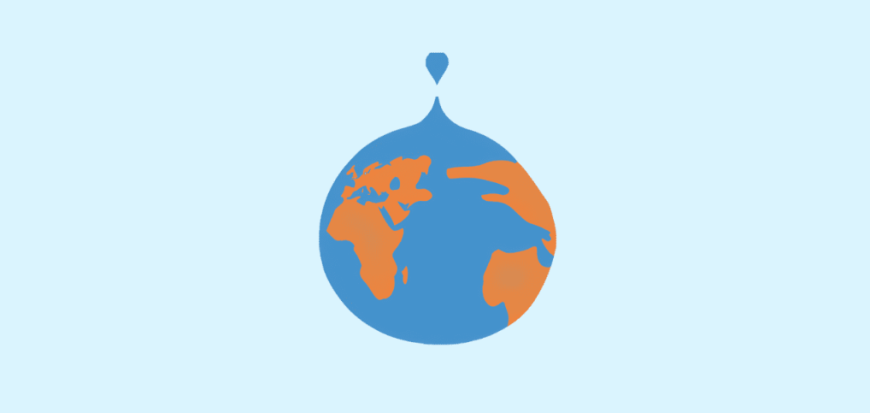
When we look at our planet from space, the colour blue undeniably takes centre stage: water covers no less than two-thirds of the globe. Perhaps that is why it strikes us as odd to hear the term ‘water crisis’: how can there be a crisis when more than half of the Earth is covered by water?
But the truth is that only 1 per cent of all that vast expanse of liquid is fresh water accessible for human consumption. The overuse of this resource, combined with rapid population growth and various weather-related disasters, has brought us to this point, which demonstrates that water is a finite resource.
Although critical, the situation is not insurmountable: we still have time to act. This is where SDG 6 (Clean Water and Sanitation) comes in, which advocates improving water quality and ensuring universal access to sanitation, whilst expanding international cooperation on programmes and activities aimed at raising awareness and managing water resources.
What is the situation in Spain? The country is one of Europe’s main biodiversity hotspots, but, according to the 2023 Report on Drought Management presented by MITECO, ‘14.6 per cent of the national territory is in a state of emergency due to water scarcity and 27.4 per cent is on alert’ due to the decline in rainfall compared with previous periods. Furthermore, Spain is particularly vulnerable to climate change due to the specific geographical distribution of its water resources: droughts, heatwaves, floods and wildfires have become commonplace.
Spain is particularly vulnerable to climate change due to the geographical distribution of its water resources
Thus, one of the key initiatives for achieving SDG 6 is the ‘Tic-Tac, water is finite’ campaign, developed by the Spanish Rural Development Network (REDR) with funding from the Ministry of Social Rights, Consumer Affairs and the 2030 Agenda. Its aim is to raise awareness, conduct research and promote good practices in managing the water crisis.
REDR proposes, on the one hand, a set of Action Guidelines and Best Practices which set out how all members of society – from individuals to institutions, including private companies – can combine their efforts in the fight against the water crisis. Water is essential at every level: not only for our bodies, but also in terms of energy and production. The proposed measures include promoting local production and the circular economy, preventing food waste (which accounts for up to 20 per cent of the planet’s freshwater consumption), investing in efficient facilities within businesses, and utilising public funding to manage resources more effectively and raise public awareness.
Proof that there is hope is that these initiatives are not merely remaining on paper. REDR has also presented success stories at all levels, such as the best practices at the Keppel Marina East desalination plant in Singapore, which turns salt water into drinking water, or the PERTE for Water Digitalisation, which combines digitalisation and the water cycle to improve water resource management in Spain.
And raising awareness is also a key focus, with programmes such as the environmental education project ‘Explore your river!’, promoted by the Cantabrian Rural Development Network. Dozens of initiatives point to a bright future for the blue of our planet (and those yet to come). It is worth noting that REDR has complemented this documentation work with a national and international advocacy campaign involving key stakeholders to raise awareness and ultimately ensure the transition from theory to action.
Article taken from Ethic magazine. Read the article