




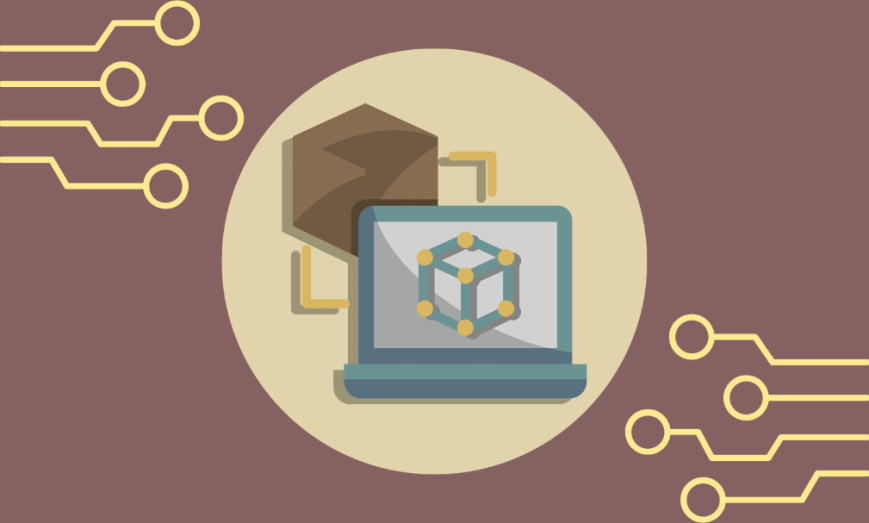
Tools such as virtual twins can digitise all the available information on products or production processes, enabling companies to simulate and optimise their operations before carrying them out.
If the European Union’s industrial sector were to adopt the circular economy, it would save up to 630 billion dollars a year on raw materials – around 580 billion euros. Undoubtedly, this approach – in which no material or process is wasted, and indeed everything can be recycled – represents a sound solution for maximising the resources available within the supply chain and production process, thereby extending their lifespan within the production cycle. Furthermore, the circular economy offers a powerful response to the environmental crisis, as it could eliminate up to 45 per cent of global emissions and profoundly transform the way we produce and consume, promoting a more efficient and sustainable model in which every resource is utilised to the full.
Technology plays a crucial role in this transition. Tools such as virtual twins have the capacity to digitise all available information on products or production processes, enabling companies to simulate and optimise their operations before carrying them out. This helps to minimise errors and waste, evaluate different scenarios and, ultimately, choose the most sustainable and efficient option. As a result, a full life-cycle approach is promoted, where products are designed to be more durable, reusable and recyclable at the end of their useful life.
From the linear model to the circular model
To participate in the circular economy, companies must take three aspects into account. Firstly, end-to-end visibility across their supply chains. Understanding how each process works, from the procurement of materials to the final disposal of the product, in order to identify areas where the most waste is generated and find ways to turn it into resources.
Virtual twins can help achieve this holistic view, encompassing all product components, and detect potential leaks or inefficiencies in the value chain. As a result, companies can better understand how their suppliers align with the principles of the circular economy. Virtual twins use data to provide detailed insights into the long-term impacts of each specific item, component or piece of equipment. They thus become comprehensive tools that transform data into valuable insights, helping companies to identify and capitalise on all opportunities within their supply chains to support and enhance circularity.
Virtual twins use data to provide detailed information on the long-term impacts of each item
Secondly, it is advisable to assess the life cycle of products so that factories can make more sustainable, data-driven decisions. This type of assessment enables companies not only to comply with environmental regulations, but also to enhance their reputation and attract consumers who are increasingly aware of the impact of their purchases. Similarly, organisations can create digital replicas of their products, processes and systems to simulate and optimise every phase of the life cycle. In this way, they significantly improve waste management, transforming what was traditionally considered waste into materials suitable for recovery and reuse.
Finally, optimising production processes and ensuring that products are manufactured correctly from the outset is vital for minimising waste. Similarly, digital twins also enable products and materials to remain in use for longer, avoiding the use of non-renewable resources, achieving greater efficiency in their use and minimising environmental impact.
We must recognise that the reduction, recycling and reuse of materials are fundamental to ensuring sustainable economic and social development, and to accelerating the transition towards a more environmentally responsible economy. Undoubtedly, these actions will shape not only our present, but also the future we leave to coming generations.
Article from Ethic magazine. Read article