





We’re delighted to have been part of this initiative!

The Sustainable Fashion Week Madrid catwalk event, held from 5 to 9 February – which marked the debut of the ‘Let it Slow!’ fashion shows – makes Madrid one of the few cities that actively promotes and supports sustainable fashion in a clear and tangible way by dedicating a whole week to it.
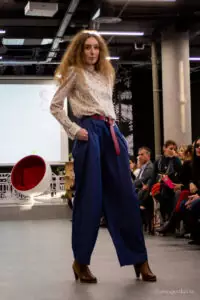
Two different venues – Talent Garden Madrid and the Buero Vallejo Theatre in Alcorcón – hosted two complementary fashion shows that showcased a diverse, inclusive society with a gender-sensitive perspective. The first featured 15 national and international brands and a final group show with a further 10 brands, coordinated by the team at The Circular Project, showcasing the diversity and wide range of options we are already achieving in sustainable fashion. The second was an innovative initiative centred on textile recycling: Queen Upcycling, which revolved around an installation featuring a mountain of clothes created by Altrapo Lab during its now-famous textile marathon, and was accompanied by an exclusive jam session courtesy of María Toro, Lucía Rey and Cristina Mora.
A very deliberate way to round off the event, because if there’s one thing we need to realise, it’s that we manufacture and consume clothing beyond the planet’s capacity, and that textile waste (in Madrid alone, 9 tonnes of clothing are collected every day) is suffocating us all and depleting the planet.
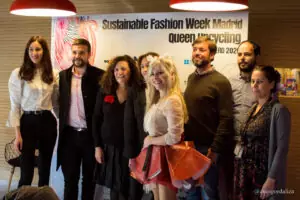 SFW Madrid opens the door in the city to greater visibility for the work of major brands that are turning the creation of clothing and accessories into an incredibly effective tool in the fight against climate change, whilst providing designers with a space to showcase their work – a space where they can find recognition and align themselves with values and working methods centred on the Triple Balance.
A different kind of catwalk where everyone is fully aware that every step we take has environmental consequences – in most cases negative – and that it is essential to understand, minimise and positively offset these impacts. For this reason, from the preparatory stages right through to the closing ceremony, carbon emissions have been measured; these will be set out in a report and, finally, in plans for improvement and offsetting, thanks to Pedro Olazábal of Areteia RSC.
Fashion centred on the Sustainable Development Goals
 The opening day was led by its director, Paloma G. López, who placed particular emphasis on the fact that Sustainable Fashion Week Madrid draws its inspiration from and bases its roadmap on the Sustainable Development Goals, which are reflected throughout the event in all its guidelines, and particularly in three of them.
SDG 9
SDG 9: Innovation, Technology and Industry, represented by our wonderful host, Talent Garden, for its dedication to all things innovative that help us move in the right direction, and for welcoming us with boundless generosity.
SDG 11
SDG 11: Sustainable Cities and Communities, championed by the city of Alcorcón and its local government for their commitment to the environment and waste management, and by Esmasa, which is working with determination to find a solution to the textile waste that is overwhelming us.
SDG 17
And, above all, at the heart of all these is SDG 17: Partnerships for the Goals, because if there is one thing that SFW Madrid has been, it is the coming together of many people to bring about social change towards sustainability, from PEFC Spain, with ‘Forest for Fashion’ as a living example of collaboration, supporting all sustainable fashion initiatives from the very start and bringing with them the wonderful María Lafuente; Teamlabs and its new educational approach, as well as the British Council; Sukisimo, with the launch of an e-commerce platform that’s shaking up the status quo for us all; El Naturalista providing footwear for the models, Boho with its eco-friendly make-up, and Sleepn Atocha; Apoyo Positivo showcasing our designs; Down Madrid forming part of our team; and Espacio C, Sannas and the Madrid Sustainable Fashion Association building a community and pitching in to get the project off the ground.
Companies with a serious commitment to the people of the world and to the environment; companies committed to the transparency and traceability demanded by the times we live in. Fashion in the service of change.
A new economy based on values and guided by the SDGs.
We used to be part of the problem; today we are the solution.
Conferences
Gaining a better understanding of how to work in sustainable fashion
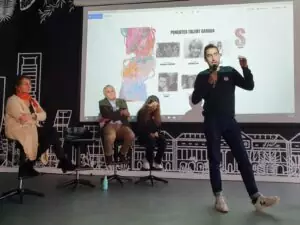
In both venues, there was also time for reflection and learning about how we are making the transition towards a new model for industry and the economy.
Thus, on Friday 7th at Talent Garden, following the official opening of SFW Madrid, the first talks began with an overview of the new company that has emerged and is working with a focus on the SDGs, thanks to presentations by Daniela Pavlova, manager of Sannas, the Association of Companies for the Triple Bottom Line, and Victor Delgado, Chief Executive of AEMME, the Spanish Multisectoral Association of Micro-enterprises. They were followed by Nuria Neira and Inma Peñate, experts in brand consultancy, who held the audience’s full attention—particularly that of emerging brands—with their presentations centred on brand creation and how to take firm steps towards building a solid business.
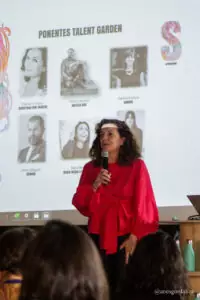 Next, Inés RIR introduced us to the world of reviving traditional handcrafted textile techniques with a powerful presentation in which past and future come together through time-honoured techniques whose sustainability has been amply demonstrated. This led into the presentation by the doyenne of Spanish dyers: Ana Roquero, who brought a world of colours in harmony with nature and its diversity.
The final panel of the morning concluded with a discussion on the industry and textiles of the future, featuring José Antonio Mazorra (CSR Director at Textil Santanderina), David Allo (Sustainability Director at Texfor), Ana Belén Noriega (Secretary General of PEFC Spain) and Pilar Tejada (Pyrates). Individually and collectively, by the end of the morning they had pieced together a picture of our industry and how, through the most rigorous research and innovation, they are creating the low-impact and recycled materials that sustainable fashion designers seek for their collections.
Meanwhile, on Sunday 9 February, the auditorium of the Buero Vallejo Theatre in Alcorcón hosted a full morning of sessions on waste management and the conversion of waste into raw materials.
The event was opened by Jesús Santos, Deputy Mayor of Alcorcón and Chairman of Esmasa; Raquel Rodríguez Tercero, Councillor for Feminism; Sonia López Cedena, Councillor for Culture; and Paloma G. López, director of SFW Madrid. The event once again highlighted the city of Alcorcón’s commitment to waste management, the gender perspective and its partnership with sustainable fashion to raise awareness of an alternative way of creating fashion and dressing.
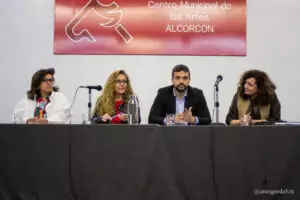 The panel discussion featured Sylvia Calvo from BCN, Jerónimo Molero from Ambiente Europeo, Patricia Astrain from Recircular and Carmen Zapata from Customizando, each of whom demonstrated how, from different and seemingly very distinct perspectives, waste management can be approached as an opportunity for employment whilst simultaneously providing a solution to a very serious environmental problem.
These were intense days during which sustainable fashion was brought to the attention of many people who were unaware of its existence and who, until now, had not considered that there are other ways of dressing that can help reverse climate change.
Source: The Circular Project